The 3 AM Alert: Why Your "Smart" Building Is Failing to Communicate
Imagine it’s 3:00 AM. A critical air conditioning unit in your main server room fails. Your multi-million dollar Building Management System (BMS) knows it instantly. But do you? Does the on-call engineer? Or is that critical alert waiting on the dashboard until the right person arrives at 8:00 AM to see - a room full of melted servers?
This is the central failure of so-many "smart" buildings. We've invested heavily in systems that can detect everything, but we've failed to solve the most critical part: getting the right information to the right person, right now.
Effective building management hinges on the timely flow of information. But as buildings become more complex, traditional communication methods are breaking down.
The Problem: "Alert Fatigue" in a 24/7 World
If your building's alert system relies on manual dashboard monitoring or automated emails, it's already failing. The challenge isn't a lack of data; it's a lack of effective delivery.
The "Wall of Noise" and Alert Fatigue
Your BMS is chatty. It sends alerts for everything: "Filter 12 is 80% dirty," "Room 201 is 1° too warm," "Pump 3A has run for 500 hours." When a truly critical alert comes in, it looks just like the others. We've trained our staff to ignore a constant stream of low-priority notifications. When every alert is treated as "urgent," no alert is urgent.
The 24/7 Dashboard Myth
Many facilities still rely on a central dashboard for monitoring. This is a fragile solution that depends on one thing: a human being physically watching a screen, 24/7. In today's lean operations, this is not just inefficient; it's a fantasy.
The Internet: Your System's Single Point of Failure
This is the single biggest threat to modern building management. Many new notification systems are cloud-based. They are 100% dependent on a stable internet connection to function. Now, ask yourself: when is your building most vulnerable? During a crisis.
A severe storm, a power outage, or a local fiber cut. In these exact moments, the internet is the first thing to fail. If your building's internet goes down, your cloud-based alert system is completely blind. We have recently seen examples of major cloud infrastructure companies, whose infrastructure experienced several hours of downtime due to the incorrect configurations. The generator can fail, the basement can flood, and the security system can go offline, but the cloud service can't send a single notification.
The Solution: An On-Premise Hardware Gateway for Critical Alerts
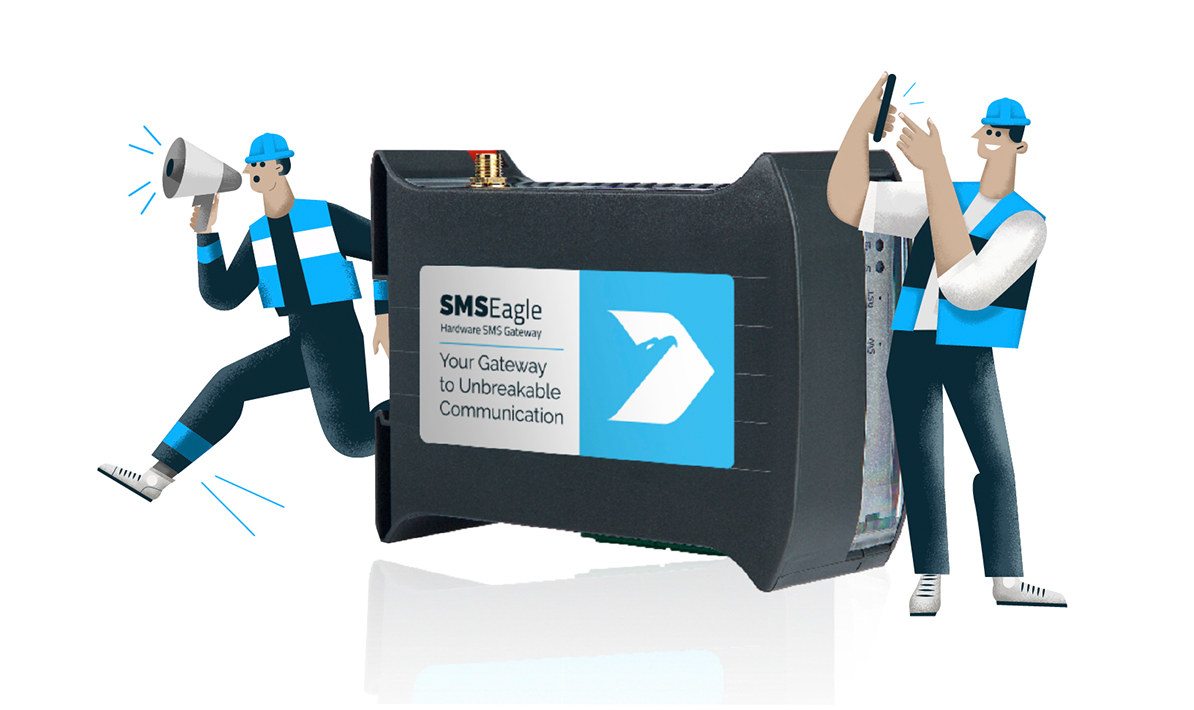
The solution is to stop relying on the internet and external cloud services for your most critical messages. The solution is an on-premise hardware notification gateway.
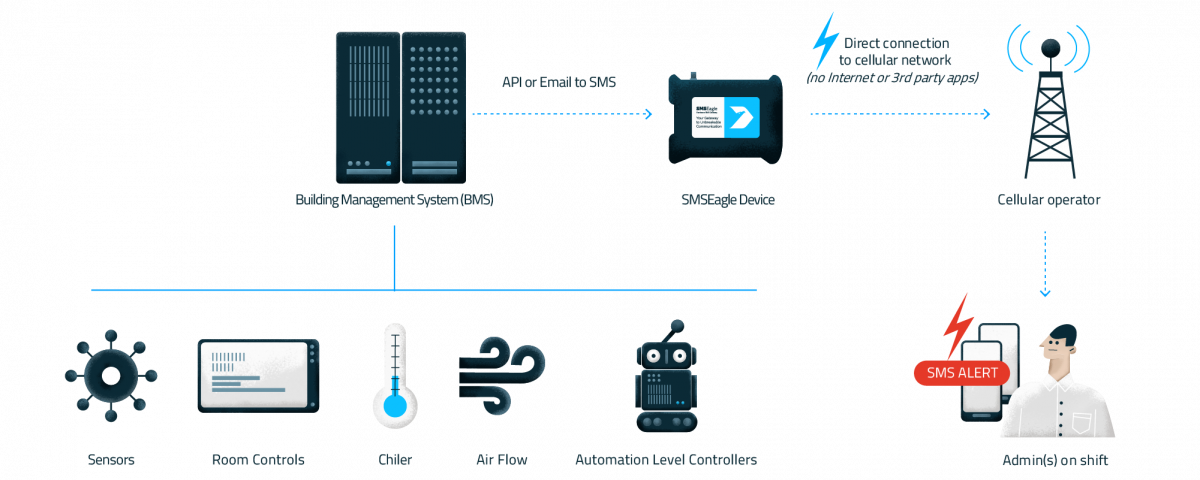
This is a physical device that sits securely inside your building. It connects directly to your BMS (or any other system) but sends its alerts out using a more robust, reliable channel: the cellular network (SMS).
A dedicated hardware gateway, like an SMSEagle, is purpose-built to solve this problem. It’s not just a modem; it's an intelligent communication hub that acts as the failsafe for your entire operation.
A Robust Solution That Solves the Core Problems
Here’s how an on-premise hardware SMS gateway directly fixes the failures of other systems and provides a clear return on investment.
It’s Reliable (It Bypasses the Internet)
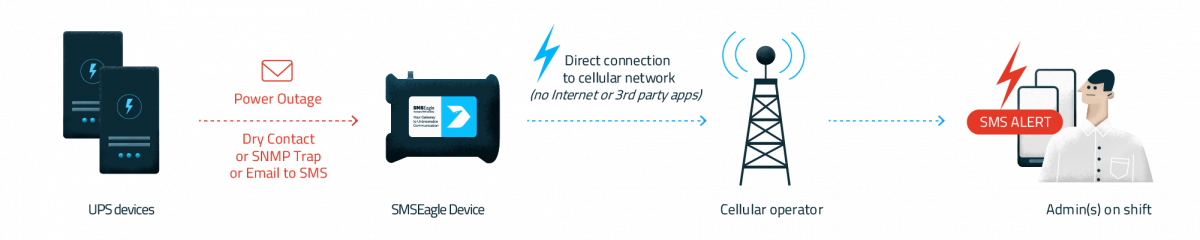
Because the SMSEagle gateway has its own SIM card, it doesn't use your building's internet to send messages. When a storm knocks out your IT infrastructure, the cellular network almost always stays up. The gateway can still send an SMS from the BMS to your on-call team, warning them that the main power is down or the backup generator has failed. This operational independence is the key to reliability.
It’s Secure and Compliant (Your Data Stays Yours)
In an era of strict data privacy (like GDPR), do you really want to send your employee contact lists and building alert data to a third-party cloud service? An on-premise solution means all your data—contact lists, alert logs, and message content—stays within your own secure network. The device sends the SMS straight to the cellular carrier with no intermediary. For organizations in finance, healthcare, or government, this isn't just a "nice-to-have"; it's a requirement.
It’s Cost-Effective (A Clear TCO)
Cloud services rely on a recurring subscription model (Operational Expense, or OpEx). These monthly fees add up, and the cost often scales with the number of messages you send or users you have. A hardware gateway like SMSEagle is a one-time capital expenditure (CapEx). You buy the device, and you own it. There are no subscription fees or per-message charges from the manufacturer. This results in a significantly lower Total Cost of Ownership (TCO) over the long term.
It’s Intelligent (It Cuts Through the Noise)
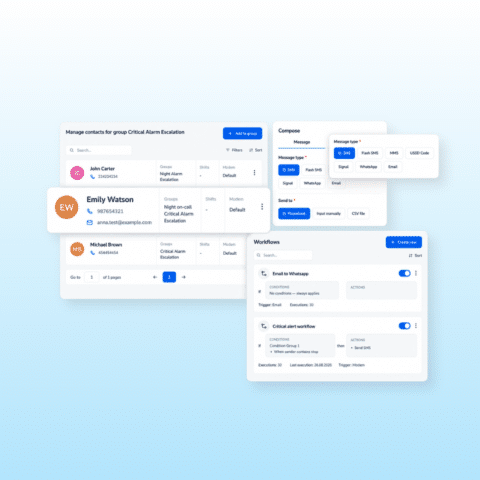
A smart gateway doesn't just blast every alert to everyone. It integrates with your team’s workflow using advanced features:
- On-Call Scheduling: You can use built-in shift management feature, so the system knows who is on duty, ensuring the 3 AM alert goes to the person on shift, not the one who's on vacation.
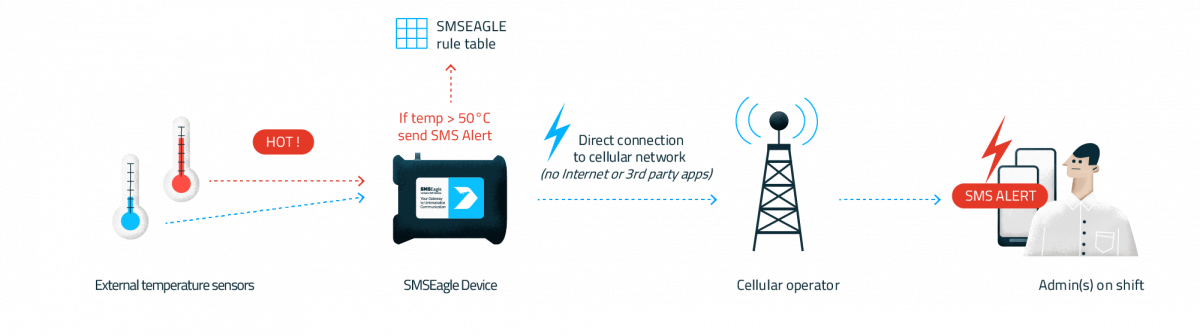
- Smart Escalations: You can define a chain of command (using escalation groups). A "High-Temp" alert can be sent to the primary HVAC tech. If it's not acknowledged within 10 minutes, the system automatically escalates it to the facility manager.
- The Right Channel for the Right Alert: You can use SMS and TTS voice calls for true emergencies (Fire, Security, Flood) and email for routine maintenance (Filter changes, usage reports). This stops alert fatigue and reclaims the power of the critical notification.
How to Integrate an SMS Gateway with Your BMS
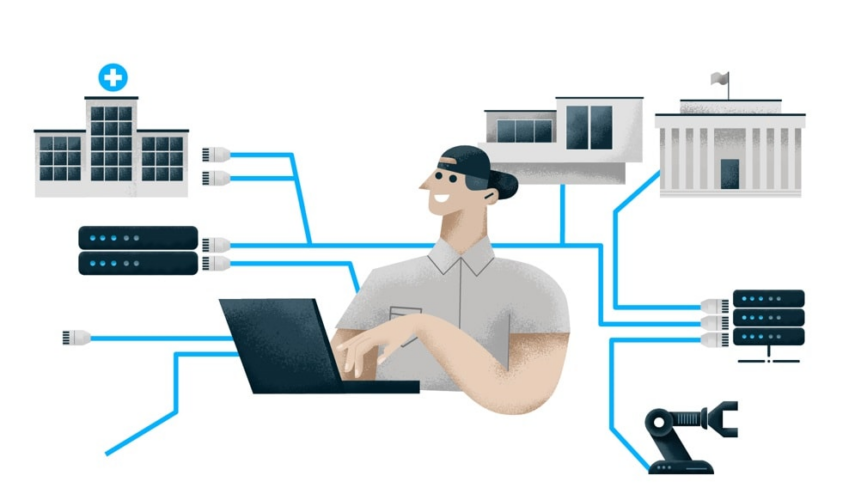
You don't need a brand-new building to use this. A hardware gateway is designed to be flexible and work with any BMS, new or old.
For Modern Systems (API & Native Integration)
Most modern BMS platforms, like those built on the Niagara Framework, are designed to be interoperable. They can "speak" to other devices using a standard REST API. A gateway like SMSEagle has a full API, allowing your BMS to trigger the sending of messages, manage contacts, and check delivery statuses. For common platforms, pre-built integration plugins exist that make the setup a simple drag-and-drop process.
For Legacy Systems (Email-to-SMS)
What if your old, closed-box BMS can only send an email? No problem. You can configure the BMS to send its alert email to the SMSEagle device. The gateway instantly parses the email, extracts the critical info (like "Server Room Temp > 30°C"), and converts it into a concise SMS for the right team. This simple method adds modern, reliable SMS alerts to any system that can send an email.
SMSEagle Use Cases for Building Automation