Best SMS gateway solutions in 2026: comparison, ranking and buying guide

Looking for the best SMS gateway? When a critical alert fails to arrive, the consequences can range from operational downtime to serious security or safety risks.  But not all SMS gateways deliver the same level of reliability, security, scalability, or control. This comparison evaluates the leading SMS gateway solutions to help you find the best fit for your organization. 

What is an SMS gateway?


An SMS gateway is a solution that allows applications, monitoring systems, and business software to send and receive text messages through mobile networks. It enables organizations to automate alerts, notifications, authentication messages, customer communications, and operational workflows 

SMS gateways can be deployed in several ways. Cloud-based SMS gateways route messages through a third-party provider’s infrastructure, while hardware SMS gateways use local SIM cards and communicate directly with mobile networks. Software SMS gateways offer a flexible alternative, connecting applications to GSM modems, Android devices, or telecom operators through protocols such as SMPP, HTTP, and REST APIs. 

Common SMS gateway use cases

Organizations use SMS gateways for a wide range of purposes, including IT monitoring alerts, incident response, industrial monitoring, business continuity, customer notifications, appointment reminders, two-way SMS communication, and verification codes. 

When choosing an SMS gateway, organizations should consider factors such as reliability, security, scalability, integration capabilities, failover options, delivery visibility, and total cost of ownership. The best solution depends on whether the primary goal is critical alerting, operational communications, customer engagement, or high-volume messaging. 

Methodology: how we ranked the best SMS gateways

This comparison was prepared by SMSEagle. Rankings and product descriptions are based on publicly available vendor documentation, and the criteria that matter most when SMS communication is used for operational or business-critical purposes. We evaluated each solution across specific criteria, including API integration, automation, and two-way SMS and delivery reporting. 

Criterion Why it matters 
Reliability Will messages be delivered when systems, networks, or cloud services fail? 
On-premise security and data control Can the organization keep message data, logs, and infrastructure under its own control? 
Failover and redundancy Can communication continue if a modem, device, network path, or service fails? 
API integration and automation How easily can the gateway integrate with monitoring tools, IT systems, and business applications? 
Monitoring and reporting Can administrators verify message delivery, system health, and alerting performance? 
Total cost of ownership What are the long-term operational costs, including licenses, traffic fees, infrastructure, and maintenance? 
Best-fit use cases Is the solution designed for critical alerts, monitoring, industrial systems, telecom use, marketing, or customer engagement? 

Because this ranking weighs reliability and operational control more heavily than raw message throughput, a high-volume bulk-messaging gateway will not necessarily outrank a lower-throughput device built specifically for critical alerting. Readers prioritizing maximum messages-per-minute to send messages to mobile devices for marketing campaigns should weigh the throughput figures below more heavily than the overall rank, especially where message type, destination country, and messaging costs can matter more across the customer journey than for purely operational alerting. 

Best SMS gateway solutions in 2026 - quick comparison

Manufacturer Type Best For Throughput (max) Purchase price (EUR, list price as of August 7, 2026) Additional costs
SMSEagle Hardware SMS Gateway Critical alerts & monitoring: IT, BMS, healthcare, government, finance, telecom, transportation, education, manufacturing, emergency services 30-240 SMS/min, depending on the model (1-, 2-, or 8-modem devices are available) Starting at ~1000 EUR No subscription fees; Requires the purchase of a SIM card from a local carrier
Ozeki SMS Gateway Software-Defined Gateway (On-prem or Cloud VPS) Small to Medium Businesses, industrial & PLC applications, telecom/IT companies, high-volume automation 10-30000 SMS/min depending on system size. Upper figure applies to IP-SMS/SMPP only GSM/Android throughput depends on cellular network limits. One-time license; lifetime use Requires your own server infrastructure. Additional costs may include updates, operating system maintenance, server administration, and SMS service providers.
Hypermedia (HyperSMS) Hardware Gateway Medium-to-large enterprises, corporate messaging, call centers, telecom providers, testing & verification, low-power deployments and high-speed industrial applications 24 to 256 SMS/min (devices are scalable from 4 to 32 SMS ports) Starting at ~2100 EUR Costs depend on the chosen deployment model and the number of GSM channels. In addition to the purchase of equipment, there may be expenses related to equipment maintenance, SIM cards, and system administration.
Teltonika Networks Industrial cellular gateway with SMS utilities Industrial & IoT, energy & utilities, smart cities, transportation, automation, retail Not published by vendor Gateways from ~100 EUR; Teltonika RMS from 1.90-2.60 EUR per device per month via an RMS credit system The gateways are not dedicated SMS platforms. Additional resources may be required for integration, configuration, and the development of custom message management mechanisms. If you use an RMS (Remote Management System), additional fees may apply for remote device management.
Dinstar Hardware Gateway Small-to-Medium Enterprises, call centers, hotels, hospitals, campuses Not published by vendor Starting at ~690 EUR A SIM card and service provider are required. There are no manufacturer-imposed messaging fees, but larger multi-channel configurations result in higher hardware and management costs.
Skyline Telecom Hardware Gateway High-volume and Budget-conscious bulk SMS, Call Centers & Enterprises, Telecom Operators & VoIP Service Providers The manufacturer declares 200-800 SMS/min (4 channel) and up to 5,440 SMS/min (64 channel) Starting at ~240 EUR A SIM card and service provider are required. Larger deployments often require additional resources for configuration, administration, modem replacement, and managing a large number of SIM cards. The total cost of ownership depends mainly on the scale of the infrastructure and the volume of SMS traffic
Twilio* Cloud Platform (CPaaS) E-commerce, customer support, developers needing global cloud scale Short Codes: 6,000 SMS/min or more; A2P 10DLC and Toll-Free throughput vary by sender type, registration and carrier policies Access to the platform is free as part of a free trial, and the full features are available through a pay-as-you-go model; standard delivery of a single text message costs ~0.0072 EUR (0.0083 USD) (USA, long code) There are no hardware costs, but there are ongoing fees for each message sent, phone numbers, and additional platform services. With high volumes and long-term use, the total cost can significantly exceed that of on-premises solutions

* Twilio is not a hardware SMS gateway but is included because many organizations compare cloud messaging platforms with on-premise SMS infrastructure during vendor selection. 

Note on categories: positions 1-7 are not a single, homogeneous product category. The ranking covers dedicated SMS hardware (SMSEagle, Hypermedia, Dinstar, Skyline), gateway software installed on the customer’s own server (Ozeki), an industrial cellular router with SMS utilities (Teltonika) and a cloud CPaaS platform (Twilio). The “Type” column identifies the category of each solution. Compare products within the same category first and treat cross-category comparisons as indicative only. 

Top SMS gateway solutions - detailed
comparison

SMSEagle – Reliable hardware SMS Gateway 

SMSEagle is a dedicated, autonomous hardware SMS gateway designed specifically for alert delivery, monitoring and critical business communication. It runs as a standalone Linux server that connects directly to cellular networks using local SIM cards, making it a reliable communication path during network or cloud outages. SMSEagle is designed for organizations that need reliable, secure and fully controlled SMS alerting for monitoring, incident response and escalation workflows.

Number of modules:
Available in configurations with 1, 2, or 8 built-in modems. Each modem can send up to 30 SMS per minute, which gives a maximum combined speed of 240 SMS per minute on the highest model.

Monitoring and reporting:
Administrators can manage communications and check delivery statuses through the Web GUI interface. The device supports hardware health monitoring (e.g., modem watchdog and temperature sensors) as well as integration with external Network Monitoring Systems (NMS), providing full visibility into alerting performance.

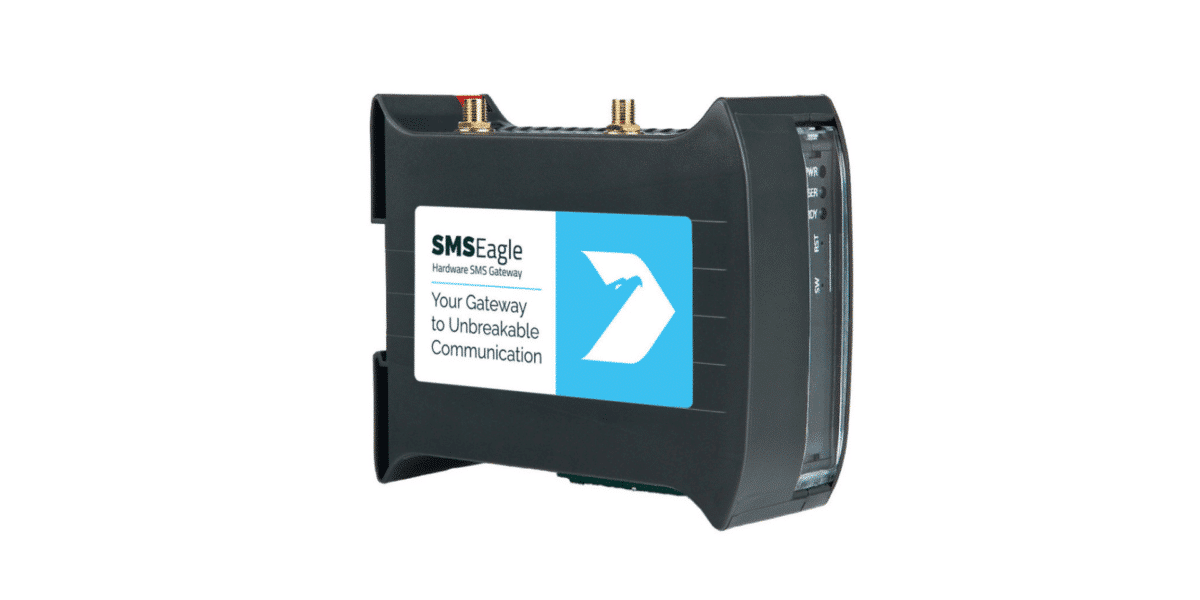
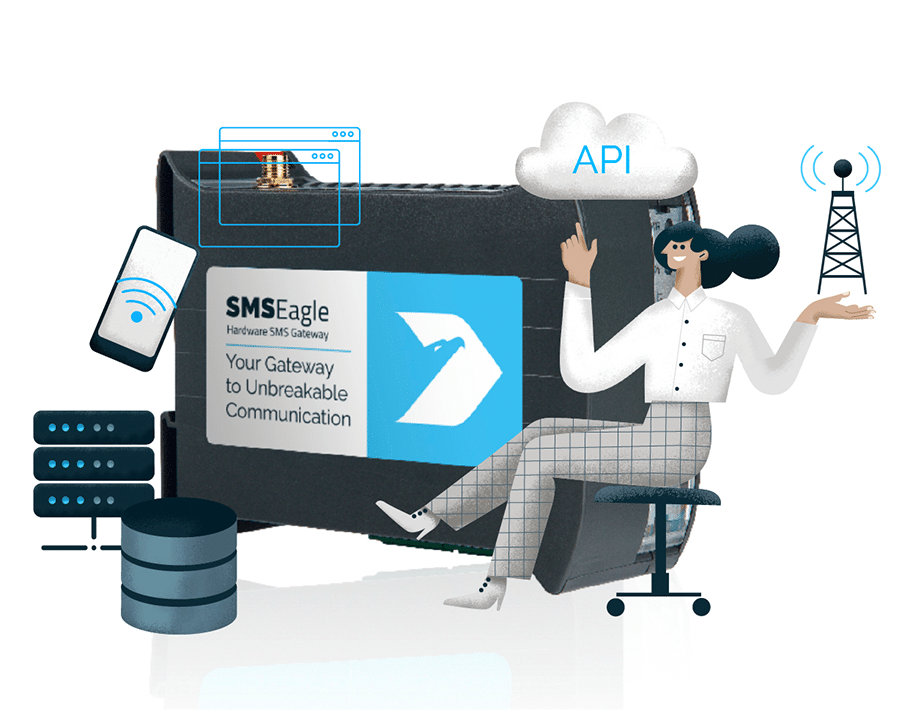
Device model: SMSEagle NXS-9700 5G

SMS Eagle hardware SMS gateway device with a blue-and-white label reading 'Your Gateway to Unbreakable Communication' on the front.

 Key strengths: 

  • Full independence: Sends SMS directly through local SIM cards without relying on cloud aggregators or an active internet connection. 
  • High Availability (HA): Two devices can be paired in a failover cluster, meaning the backup unit automatically takes over if the primary one goes offline. 
  • Modem watchdog: Built-in hardware monitoring automatically resets internal modems if they freeze or lose network connection. 
  • 40+ built-in features, including message escalation, sysadmin shift calendars, and local server monitoring without external software. 
  • Ready-made Integrations: Offers out-of-the-box integrations with over 60 monitoring tools like Zabbix, Nagios, PRTG, and various security systems. 
  • Free custom integration for your existing systems. 
  • Regular product and software updates, with technical support available by email, by phone and through the online support portal at support.smseagle.eu. 
  • Voice alerts: Can automatically convert text warnings into phone calls using interactive voice rings or multi-language Text-to-Speech. 
  • Security & compliance: On-premise data control, ISO 27001 certification, GDPR-compliant deployment support, plus regional certifications (CE, FCC, ISED, UKCA, PTCRB, RCM, IMDA, TDRA, CB Scheme and others). 
  • Real-world impact: Used by more than 8,000 organizations across 90+ countries. 
  • Clear costs: Buying the hardware means lifetime ownership with no recurring subscription fees or message licensing costs. 
  • Two-way SMS, inbox/outbox management and auto-reply features, so teams can receive and handle inbound SMS directly inside connected systems.

 Limitations: 

  • Higher upfront hardware investment compared to cloud-only SMS providers. 
  • Throughput is lower than cloud-scale messaging platforms or carrier-direct solutions. 
  • SMS delivery depends on local cellular coverage. 
  • Subject to standard SMS length and encoding constraints.

Ozeki SMS gateway: The high-performance software HUB

Ozeki is one of the best-known software-defined SMS gateways that can be installed on Windows, Linux, or as a Cloud VPS. It is designed for organizations that require high message throughput, extensive integration options and highly automated SMS workflows.  It acts as a central hub connecting corporate software to GSM modems, Android phones, or direct telecom lines (SMPP/HTTP).

Number of modules:
The server software has no limit on the number of modules. If you connect an external pool of modems to the server via USB, the system will easily support 8, 16, 32, or even more physical hardware modules simultaneously, distributing traffic (load balancing) among the individual SIM cards.  Depending on system size and deployment architecture, Ozeki states that throughput can range from 10 messages per minute in small deployments up 30,000 messages per minute) in Enterprise+ environments. Throughput over GSM modems or Android-based connections is significantly lower than IP-SMS connections and depends on cellular network limitations.

Monitoring and reporting
The system provides advanced SQL reporting that logs traffic to a database without the risk of message loss, even in the event of a database failure. Administrators can monitor traffic through bar charts and utilize guides for building High Availability (HA) systems.

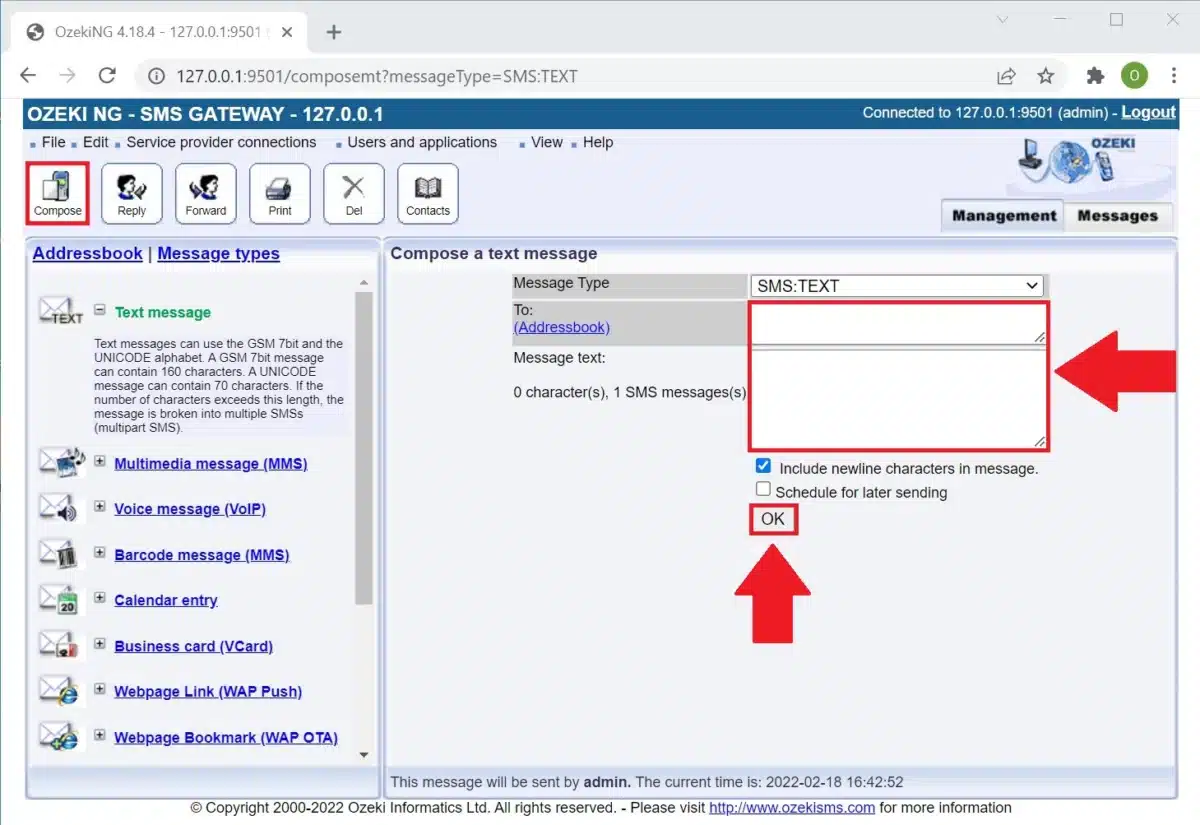
The photo shows the graphical user interface of the Ozeki NG – SMS Gateway software (SMS sending configuration).

Ozeki NG SMS Gateway compose window: left address book; right SMS text area with To, Message text, Include newline option, and OK button.

Key strengths: 

  • Software flexibility: Combine and switch between cloud IP-SMS routes, hardware GSM modems, and Android phones in one panel. 
  • Extensive protocol support: SMPP, UCP, CIMD2, plus HTTP, HTTPS, and REST. 
  • Background operation as a native Windows Service or Linux Daemon with automatic crash recovery. 
  • Android-as-a-modem: Turns corporate Android phones into SMS modems over Wi-Fi or USB. 
  • On-the-fly message modification: Intercept, reformat, or modify message content and charsets during routing. 
  • Email-to-SMS optimized for Microsoft Exchange, Office 365, Outlook, and Thunderbird. 
  • One-time license with no monthly fees (software license is one-time; SMS/service-provider costs may still apply). 
  • Easy scaling via license upgrade or added virtual server resources, without new hardware. 

Limitations: 

  • Practical throughput depends on deployment size, system resources and connection methods. 
  • Routing runs on a general-purpose OS, exposed to standard update, reboot, and security risks. 
  • Requires manual setup of external USB modems and drivers if not using IP-SMS lines. 
  • No built-in SIM bank or high-density physical SIM rotation. 
  • Automated bursts sent via attached SIM cards risk triggering carrier anti-spam filters. 

Hypermedia (HyperSMS): modular corporate scalability 

Hypermedia makes on-premise, SIM-based hardware gateways for medium and large corporate environments. It is designed to connect corporate systems directly to cellular networks while keeping messaging infrastructure fully on-premise.

Number of modules:
Hypermedia gateways has 4 to 32 physical GSM modules (ports). It typically sends 6–8 SMS messages per minute per channel, which, with a maximum configuration of 32 ports, allows for the sending up to 256 messages per minute. A single physical module/channel can have up to 10 backup SIM cards assigned to it. 

Monitoring and reporting:
The vendor offers a dedicated SMS Statistics module and access to SMS logs, allowing administrators to continuously analyze messaging performance. System management, including voice gateways, is performed through web-based interfaces.

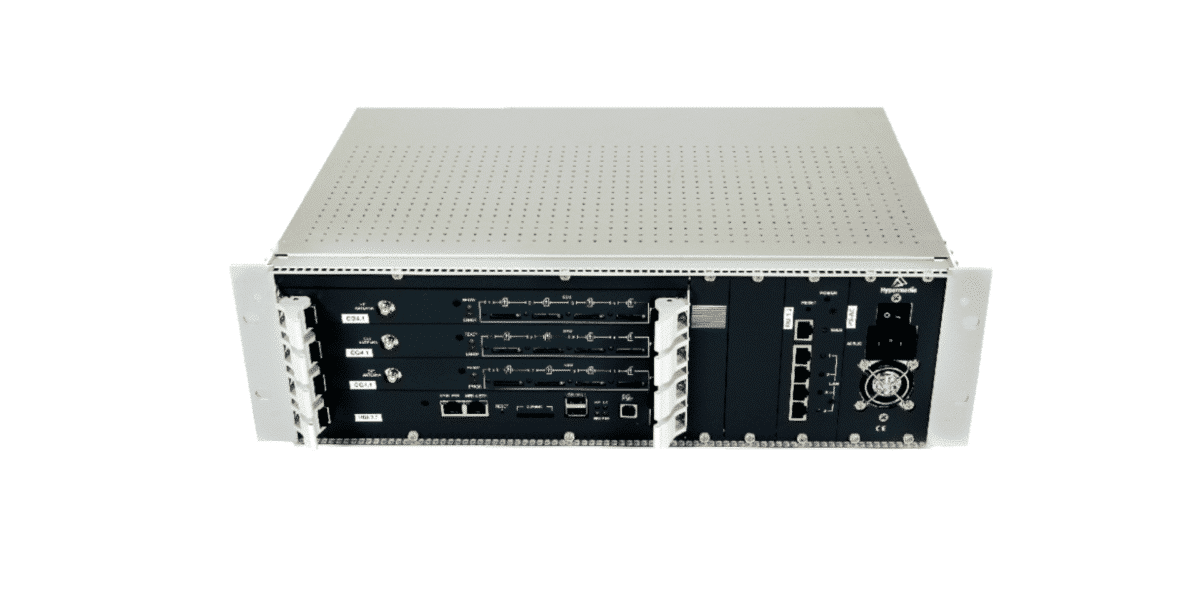
Device model: HG-7000 12-Channel 3U SMS Gateway. The photo is from the manufacturer’s website.

Front view of a rack-mount server chassis with multiple hot-swappable blades and front I/O ports on the left.

Key strengths: 

  • Least Cost Routing (LCR): Automatically selects the cheapest SIM card or network path per message. 
  • High SIM capacity: Up to 10 physical SIMs per channel for backup network coverage. 
  • Smart SIM counters: Automatically tracks and switches SIMs at operator thresholds. 
  • Direct database logs: CDR and message histories feed directly into external MySQL or Oracle databases. 
  • Built-in campaign tools supporting bulk and two-way SMS communication. 
  • Supports message priority queues for handling higher-priority SMS traffic. 
  • Two Way SMS: The Gateway can also receive messages, and can even send a subsequent message automatically, based on the answer received 
  • Support any character and language 

Limitations: 

  • Port speed is limited to the cellular channel throughput, typically 6–8 SMS/min per module. 
  • Deployments requiring more than 32 channels may require additional gateway hardware. 
  • Throughput can be reduced by delivery receipts and inbound messaging load 
  • High-volume SIM-based SMS deployments may require careful traffic management to avoid operator restrictions. 
  • Requires physical rack space, antenna setup, and on-site maintenance. 

Teltonika: przemysłowe rozwiązania M2M i łączność brzegowa w ramach Io

Teltonika is a globally recognized provider of rugged, compact, industrial gateways. Built for factories, remote outdoor sites, and machine-to-machine (M2M) environments. It is commonly deployed in industrial monitoring, remote management and connectivity scenarios.

Number of modules:
Most Teltonika devices have a single physical cellular module that supports the SMS gateway (even with two SIM slots), while advanced Dual-Modem models (e.g., the RUTX12) have two independent hardware modules that operate simultaneously. Throughput depends on the specific Teltonika model, cellular network conditions and SMS usage patterns. Teltonika does not publish standardized SMS throughput figures for its SMS gateways.

Monitoring and reporting:

A key component of the offering is RMS (Remote Management System), which enables centralized remote monitoring and management of IoT device health. The company also provides an extensive Wiki knowledge base and support forum to assist with technical diagnostics and troubleshooting.

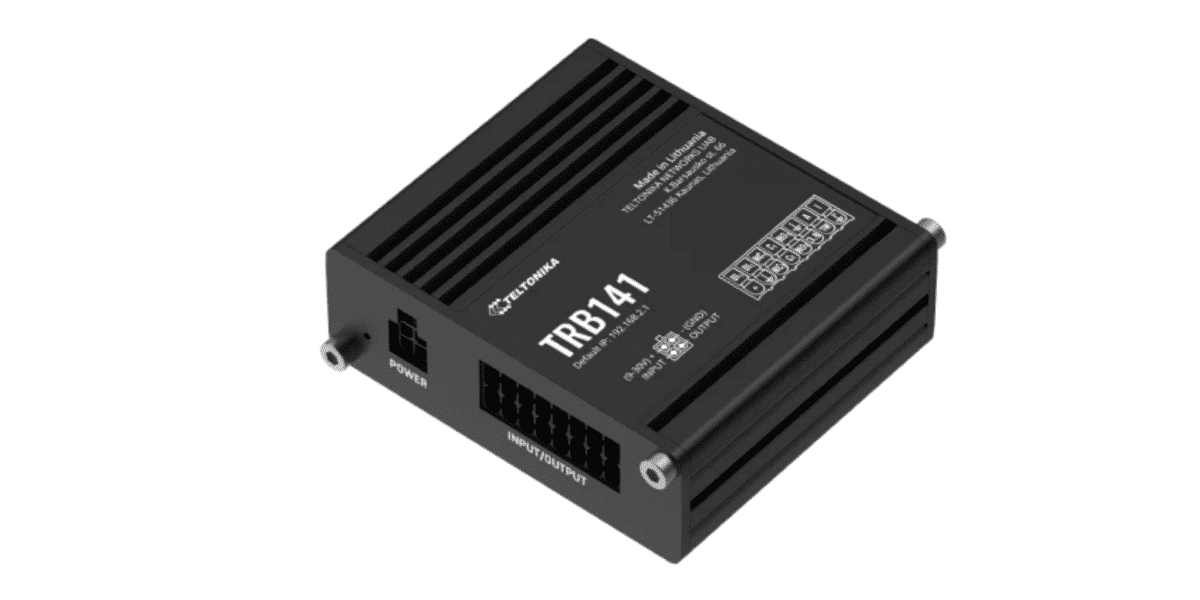
Device model: TRB141 INDUSTRIAL RUGGED GPIO LTE GATEWAY. The photo is from the manufacturer’s website.

TRB141 black industrial module with a power jack on the left and a multi-pin front connector, labeled TRB141 on a ribbed metal body.

Key strengths: 

  • Central fleet control via Remote Management System (RMS) for bulk updates across sites. 
  • Industrial-grade aluminum housing designed for harsh operating environments. 
  • Dual-SIM failover on select models if the primary network drops or hits a data limit. 
  • SMS command engine: Remotely reboot equipment, change network profiles, or query status via secure SMS commands. 
  • Modbus-to-SMS translation:  Teltonika provides configuration examples for sending SMS via Modbus TCP requests. 
  • Local SMS functionality can operate independently of cloud-based management services. 

Limitations: 

  • Primarily designed for industrial monitoring and device-management use cases, not bulk SMS messaging. 
  • Organizations needing large-scale alerting may require additional software platforms for workflow management and escalation. 
  • SMS functionality depends on the capabilities of the selected router model and cellular network conditions. 
  • High-frequency SMS traffic may be subject to carrier-imposed limitations. 
  • Requires networking and infrastructure knowledge for deployment and maintenance. 

Dinstar: hybrid VoIP-SMS gateways 

Dinstar creates multi-functional wireless gateways that merge IP-based voice routing (SIP) with standard SMS messaging. This hybrid setup is highly popular among call centers and mid-sized businesses that want to handle client phone calls and transactional texts through the same local hardware.

Number of modules:
The Dinstar UC2000 series VoIP GSM/3G/4G Gateways offer complete choices scalable from 1 to 64 channels. Dinstar does not publish standardized SMS throughput figures for its SMS gateways.

Monitoring and reporting:
Administrators can comprehensively verify message delivery, system health, and alerting performance on Dinstar SMS Gateways using built-in device APIs, detailed system logs, and centralized management platforms.

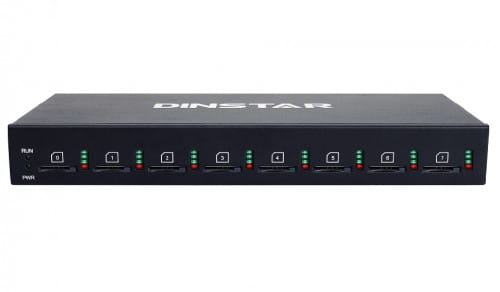
Device model: UC2000-VE GSM/WCDMA/LTE VoIP Gateway. Photo courtesy of the manufacturer.

Front view of a DINSTAR multi-port VoIP gateway with eight ports, each with status LEDs, and a power indicator on the left.

Key strengths: 

  • True voice & SMS hybrid: Concurrent SIP calls and SMS traffic through the same physical port. 
  • Manage up to 128 SIM cards through a separate, IP-linked external SIM bank. The gateway itself provides 1-4 SIM slots per port; the 128-card figure requires the additional SIM bank appliance. 
  • SIM rotation: traffic distribution across multiple SIM cards per port. 
  • Auto-CLIP routing: Routes returning calls or SMS replies back to the original handling agent. 
  • Automated credit management: Tracks prepaid SIM balances via USSD codes and triggers top-up alerts. 
  • Network security tools: Built-in firewall plus L2TP, PPTP, and OpenVPN support. 

Limitations: 

  • Basic models offer only 1–4 SIM slots per port; larger deployments need an external SIM bank. 
  • Multi-site cloud SIM setups require professional network planning. 
  • Mass-texting campaigns still face carrier blocklist risk despite behavior-emulation features. 

Skyline: high-density bulk messaging

Skyline Telecom specializes in high-port-density hardware built primarily for mass traffic, bulk SMS, and call termination. The company focuses on high-density SIM-based messaging hardware optimized for bulk SMS deployments.

Number of modules:
Models range from 4 to 64 modules. The speed can be 200- 800 SMS/min according different module. Skyline’s own materials are inconsistent on throughput: the 8-port product page quotes 200-800 SMS/min for the whole device, while the SMS Gateway solution overview quotes a maximum of 5,440 SMS/min for a 64-channel unit, which works out at roughly 85 SMS/min per channel. Ask Skyline for a written throughput specification, measured per channel and per device, before purchase.

Monitoring and reporting:
The vendor’s SMS gateways offer remote management and configuration capabilities, making it easier for administrators to monitor, maintain, and manage the system.

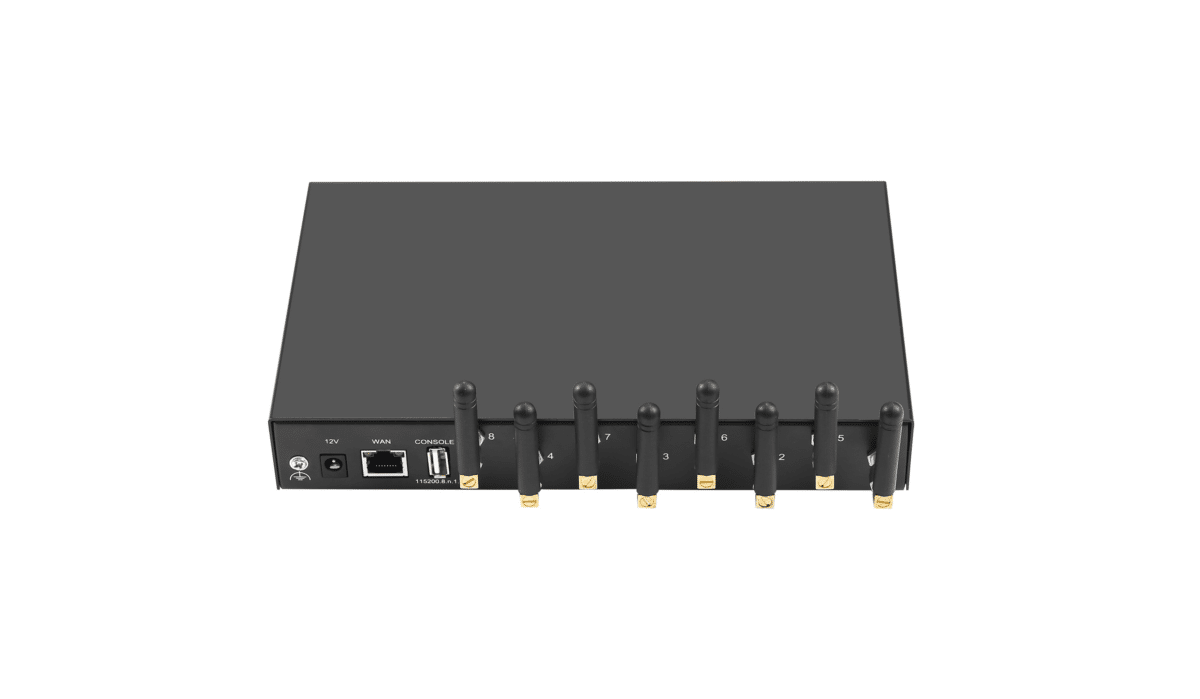
Device model: SK 8-Port SMS Gateway Modem. The photo is from the manufacturer’s website.

Black router with eight external antennas and rear port panel labeled WAN, Console, and Ethernet ports viewed from the back.

 Key strengths: 

  • High-density SMS gateway hardware with models ranging from 4 to 64 channels. 
  • SIM rotation and anti-SIM-blockage features – Up to 8 SIM cards per channel with SIM-switching functionality.  
  • Web-based EIMS platform for SMS campaign management and remote administration. 

Limitations: 

  • Primarily optimized for bulk SMS operations rather than alerting and incident-management workflows. 
  • High-volume SIM-based messaging may be subject to carrier-imposed restrictions. 
  • Large deployments may require advanced telecom and routing expertise.
  • The vendor also lists IMEI modification and human-behaviour simulation. Both are intended to make bulk traffic harder for operators to identify and filter. Depending on the market, using them may breach carrier terms of service or telecom regulations, and altering device identifiers is prohibited outright in some jurisdictions. Confirm the legal and contractual position with your operator before deployment. 

Twilio –  global cloud scale

Twilio is a global, cloud-based Communication Platform as a Service (CPaaS). It is designed for businesses that want to send text messages, WhatsApp alerts, and verification codes globally without purchasing physical servers, managing SIM cards, or dealing with local mobile operators. 

Number of modules:
No physical SIM cards; global shipping via web APIs.  Performance in the Twilio ecosystem depends solely on the assigned cloud number type (it is measured in MPS—messages per second). Short Codes: 100+ MPS (6,000+ messages/min). A2P 10DLC throughput is assigned per campaign and depends on brand registration, campaign type and carrier trust score, so the effective rate has to be checked for the specific number and campaign in the Twilio console. ntext. 

Monitoring and reporting:
As a cloud-based platform, Twilio provides public Status Pages for its services (Twilio, SendGrid, and Segment), enabling real-time visibility into infrastructure health. In addition, the Conversation Intelligence tool allows organizations to analyze the context and quality of customer interactions.

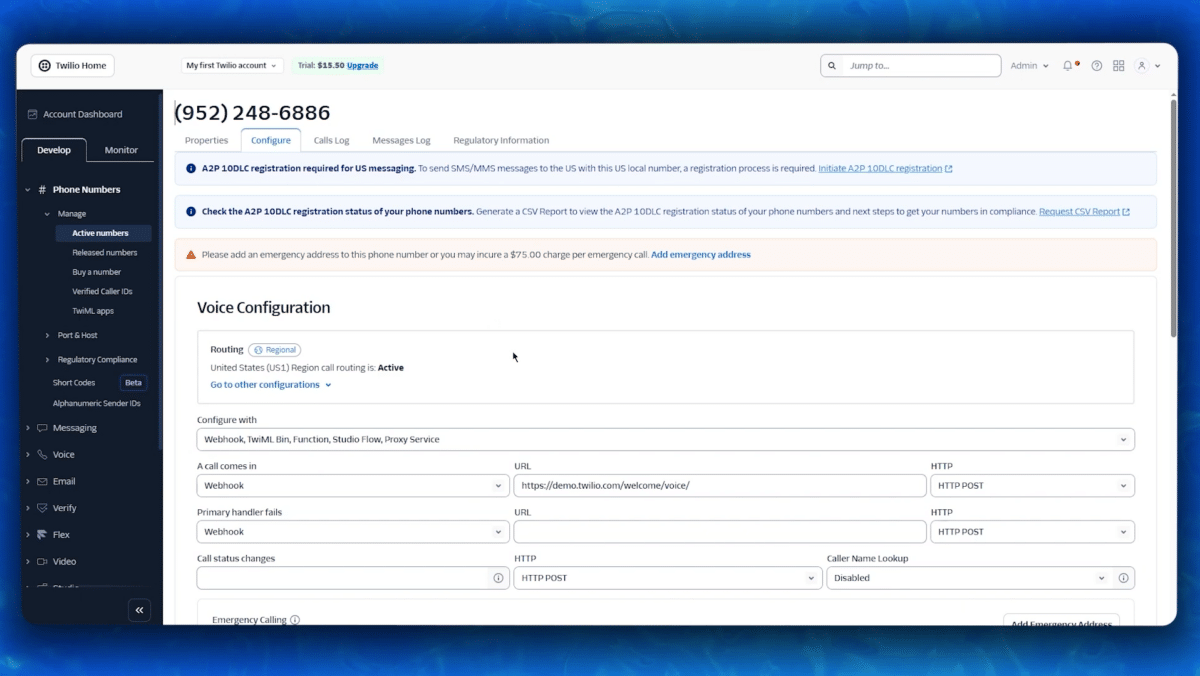
In the screenshot: A screenshot from the Twilio platform – SMS sending configuration.

Twilio console screenshot showing a phone number's configuration page with left navigation, top search bar, and a Voice Configuration section for the number (952) 248-6886.

Key strengths: 

  • No racks, antennas, or physical SIM cards to manage. 
  • Built-in compliance tooling for carrier regulations, opt-out keywords (STOP/START), and messaging registration requirements. 
  • Global network reach through cloud routing to hundreds of carriers worldwide. 
  • Enterprise security and compliance programs including SOC 2, ISO 27001, GDPR support and HIPAA-eligible services for qualifying workloads. 
  • True omnichannel API for SMS, MMS, WhatsApp Business, and voice through one stack. 
  • Developer ecosystem: SDKs for major languages, strong documentation and debugging tools. 
  • Twilio secured the top spot and ranked highest for “Ability to Execute” in the 2026 Gartner Magic Quadrant for CPaaS 

Limitations: 

  • Usage-based pricing can be more expensive than local SIM-based solutions for high-volume or predictable messaging workloads. 
  • Cannot send or receive messages if the facility loses internet connectivity, since it relies entirely on cloud API endpoints. 
  • Message logs, recipient numbers, and metadata pass through third-party cloud servers – a potential issue for strict, air-gapped security policies. 
  • Compliance and sender registration requirements (such as A2P 10DLC in the US) can add administrative complexity and may delay production deployment. 

Common mistakes when choosing an SMS gateway

  1. Comparing hardware SMS and cloud SMS as if they solve the same problem. Cloud SMS excels at scale; hardware SMS excels at autonomy and control. Treating them as interchangeable often leads to the wrong decision. 
  2. Optimizing only for throughput. High throughput matters for bulk messaging, but critical alerts usually need reliability, delivery visibility, and escalation more than raw volume. 
  3. Ignoring local cellular coverage. Hardware SMS gateways depend on mobile networks — antenna placement, SIM provider selection, signal strength, and redundancy should all be checked before deployment. 
  4. Choosing a bulk SMS gateway for critical monitoring. A large modem pool doesn’t automatically make a device suited for monitoring alerts or incident response. 
  5. Forgetting total cost of ownership. Cloud SMS often has a low entry cost but recurring usage fees; hardware gateways require upfront investment but can reduce long-term dependency on per-message pricing. 
Cartoon man with glasses smiling, touching his chin in a thoughtful pose.

Final verdict 

There is no single SMS gateway that is the best fit for every organization. The right choice depends on your priorities, infrastructure, compliance requirements, and communication goals. 

For organizations where missed alerts can lead to operational downtime, financial losses, or safety risks, reliability, autonomy, and control are often more important than raw message throughput. In these scenarios, dedicated hardware gateways such as SMSEagle provide a resilient communication path that remains independent of cloud messaging providers and internet connectivity. 

Organizations focused primarily on high-volume SMS campaigns may benefit more from throughput-oriented platforms such as Skyline, while businesses looking for global reach, omnichannel communication, and rapid deployment may find cloud-based solutions like Twilio a better fit. Meanwhile, software-driven platforms such as Ozeki offer a flexible middle ground for organizations seeking extensive integrations and automation capabilities. 

Ultimately, the best SMS gateway is not the one that sends the most messages per second – it’s the one that best matches your operational requirements, reliability expectations, security policies, and long-term cost objectives. 

To make the right decision, start by identifying the primary purpose of your SMS communication: critical alerts, industrial monitoring, customer engagement, or bulk messaging. Once that is clear, choosing the right platform becomes much easier. 

Frequently asked questions

Which SMS gateway is best?

The best SMS gateway depends on your specific requirements. For critical alerts and monitoring, hardware gateways such as SMSEagle offer high reliability and autonomy. For high-volume messaging, solutions like Skyline prioritize throughput, while cloud platforms such as Twilio provide global reach and omnichannel capabilities.

Yes, SMS gateways can be highly reliable, especially when they include failover mechanisms, delivery reports, and redundant communication paths. Hardware gateways provide independence from internet outages, while cloud platforms offer scalability and global coverage. Delivery reliability also depends on local network conditions and the provider’s routing infrastructure. 

Consider your primary use case: critical alerts, bulk messaging, or customer engagement. Evaluate factors like message volume, delivery speed, security, compliance, integration ease (API support), and total cost of ownership. Also, check for features like delivery reports, redundancy, and support. Balancing these factors will help select the right gateway. 


A hardware SMS gateway is a physical device that sends messages directly through local SIM cards and mobile networks. A cloud SMS service sends messages through a third-party provider’s infrastructure and APIs. Hardware gateways offer greater control and independence, while cloud services provide easier scalability and global reach. 

An on-premise SMS gateway gives organizations full control over message data, infrastructure, and security. It can continue operating through local mobile networks even if cloud services or internet connectivity are unavailable. It also helps reduce long-term dependency on subscription fees and third-party providers, making it a popular choice for critical alerts and operational communications. 

Free and open-source SMS gateways are available, but they often require technical expertise to deploy and maintain. Most organizations rely on commercial SMS gateway solutions that provide dedicated support, security updates, and enterprise features. While free options can be suitable for testing or small projects, they are rarely used for business-critical communication. 

Explore SMSEagle Demo device

After registering to a demo you get a remote access to our physical device NXS-9750.

  • 14-days free trial
  • Access to 30+ functionalities

Software Updates

Cartoon illustration of a muscular man with raised arms holding a device in one hand and a cloud upload icon in the other, above a blue rounded CTA reading 'Check the best SMS gateway providers'.

Best SMS gateway solutions in 2026: comparison, ranking and buying guide

Looking for the best SMS gateway? When a critical alert fails to arrive, the consequences can range from operational downtime to serious security or safety risks.  But not all SMS gateways deliver the same level of reliability, security, scalability, or control. This comparison evaluates the leading SMS gateway solutions to help you find the best fit for your organization. 

Read More »
Hero image promoting a webinar recording: overlapping slides with a blue slide reading 'Dashboard ≠ Alert' and a prominent 'Watch the webinar recording >' CTA on a light blue background.

Webinar Recording & Key Takeaways: From Passive Monitoring to Reliable Alerting with Niagara4

What happens when your system detects a critical issue — and no one reacts? This was the main question discussed during our recent webinar with Krucsó László, Technical Leader at SmartNode, and Andrzej Kubala, Head of Sales at SMSEagle. Together, they explored a real-world example showing why detecting a problem is only half the battle — the other half is ensuring someone actually takes action.

Read More »