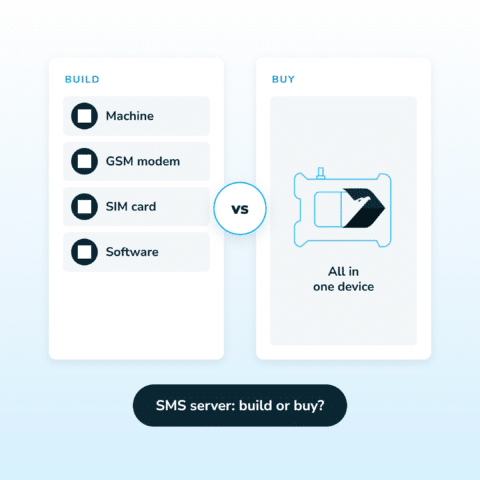
SMS server: what it takes to build one, and when to buy instead
If you are looking for an SMS server, you are usually one of two people: someone who wants to run the software themselves, or someone

What happens when your system detects a critical issue — and no one reacts? This was the main question discussed during our recent webinar with Krucsó László, Technical Leader at SmartNode, and Andrzej Kubala, Head of Sales at SMSEagle. Together, they explored a real-world example showing why detecting a problem is only half the battle — the other half is ensuring someone actually takes action.
As Krucsó László explained, many Niagara4 deployments already provide excellent visibility. Operators can see alarms, trends, events, and system status on dashboards. The challenge begins when a critical alarm appears outside working hours and nobody is looking at the screen.
This is the difference between:
One of the most memorable messages from the webinar was:
"A dashboard is not an alarm. It's only a source of information. A real alarm reaches the right person at the right time and triggers action."
The webinar featured a real case from a healthcare facility in Hungary.
The lesson was simple:
"The failure wasn't detection. The failure was notification."
To address the issue, the facility implemented an autonomous emergency notification layer based on SMSEagle hardware.
The deployment included:
As a result, critical events no longer remained visible only within the technical system. Instead, alerts actively reached responsible personnel through SMS and voice calls via the SMSEagle gateway.
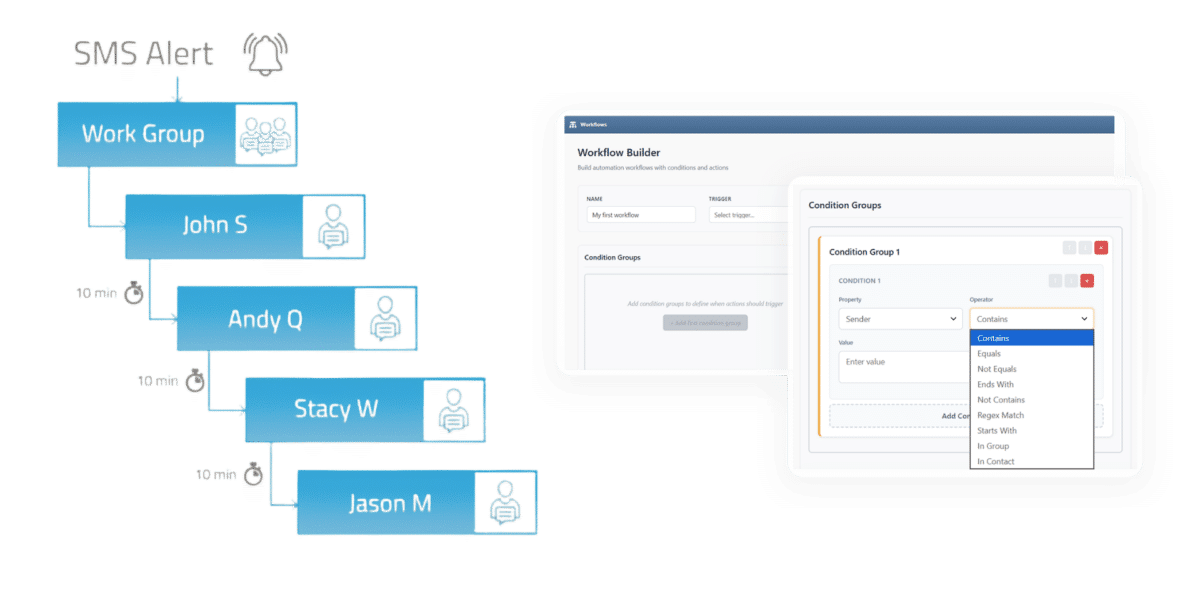
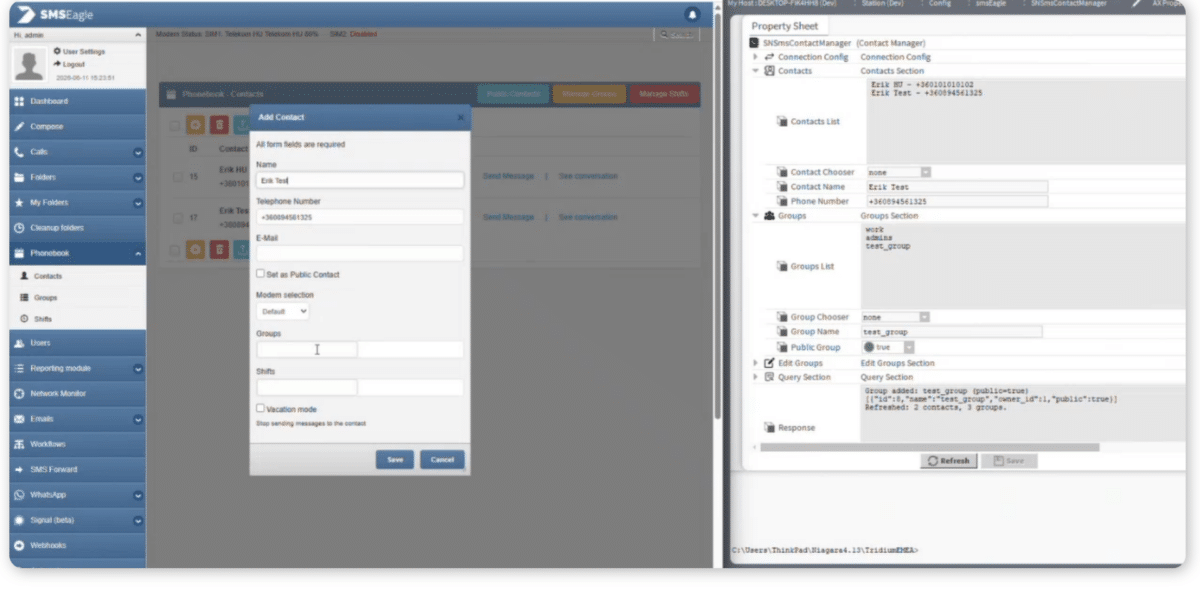
The webinar also included a live demonstration of SmartNode’s native Niagara4 integration for SMSEagle. Krucsó László showed how the module enables users to configure alerting, acknowledgements, contacts, groups, SMS messaging, voice calls, WhatsApp notifications, and I/O management directly from Niagara.
The integration also supports:
A major part of the discussion focused on alert deliverability.
Andrzej Kubala explained that critical alerts should not rely solely on traditional channels such as email. Messages can be overlooked, buried in inboxes, or missed during the night. SMSEagle was designed to provide an independent communication path through cellular networks using a physical appliance with its own SIM card.
The webinar demonstrated how organizations can combine:
within a single alerting workflow.
The takeaway was clear:
"Alerting should be designed around response, not delivery."
"Having alarms is not enough."
Before implementing a notification strategy, they recommend:
"Because the cost of a missed critical event can easily exceed the cost of implementing a reliable alerting system."

If you are looking for an SMS server, you are usually one of two people: someone who wants to run the software themselves, or someone

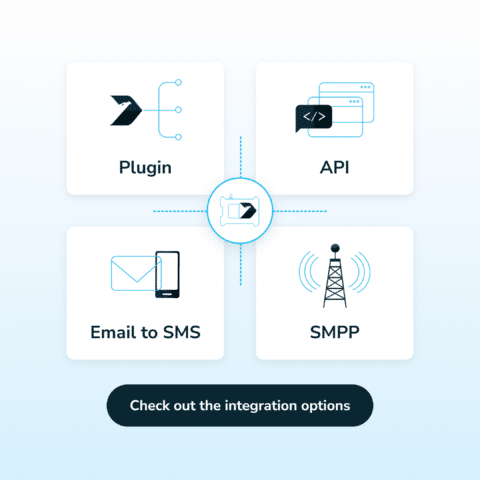
Integrating an SMS gateway means connecting your software to it, so the software can send text messages and receive replies automatically. There are four main ways to do it: a ready-made plugin, an API, Email to SMS and SMPP.
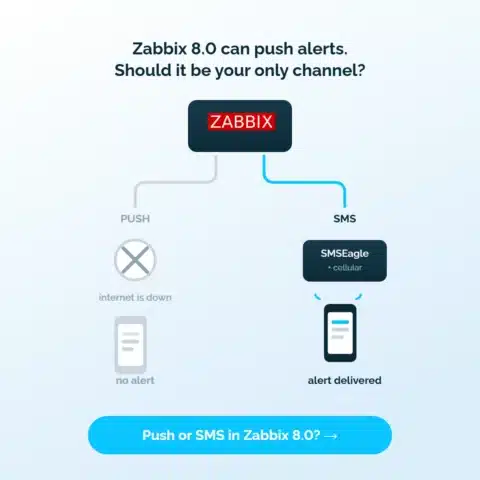
Zabbix 8.0 adds push notifications and a mobile app. Here is what the architecture depends on, where it breaks, and why SMS and voice alerts still belong in your escalation chain.

Engineer by education, marketer by choice. For 6+ years I've combined technology, data, and content marketing to help companies gain a competitive advantage and achieve measurable results. As a Technical Content Specialist at SMSEagle, I develop brand messaging and content that support sales, customer education, and market positioning. A degree in Information Systems gave me a unique perspective at the intersection of business and technology. I believe quality is the only thing worth scaling.