

Home / Integration plugins / Opsview SMS Integration

+

Send SMS alerts from Opsview

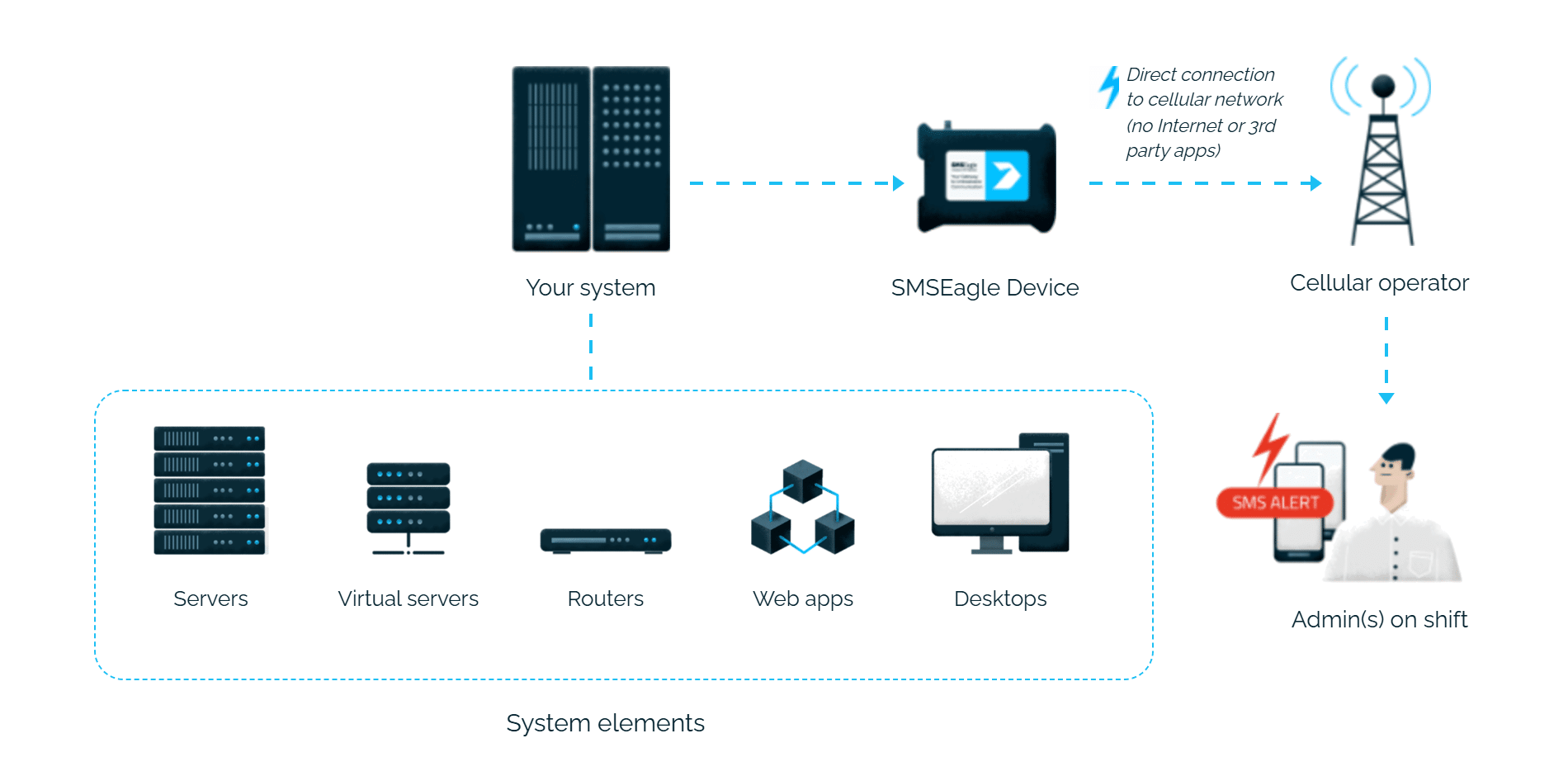
Opsview alerts reach the person on duty as an SMS. SMSEagle sends them over its own cellular connection, so they don’t depend on internet access or a cloud service.

A ready script to download

You download the script from the SMSEagle repository on GitHub and copy it to the Opsview server, with no code of your own to write.

Works with Opsview notification methods

You add SMSEagle as a notification method in Opsview, so contacts get alerts by SMS the same way as by email.

Works without internet

SMSEagle sends alerts through its own SIM card straight to the mobile network, so they don’t depend on internet access or a cloud SMS provider.

How it works

1

Event Trigger

Opsview detects a host or service failure matching a configured notification profile.

2

Communication

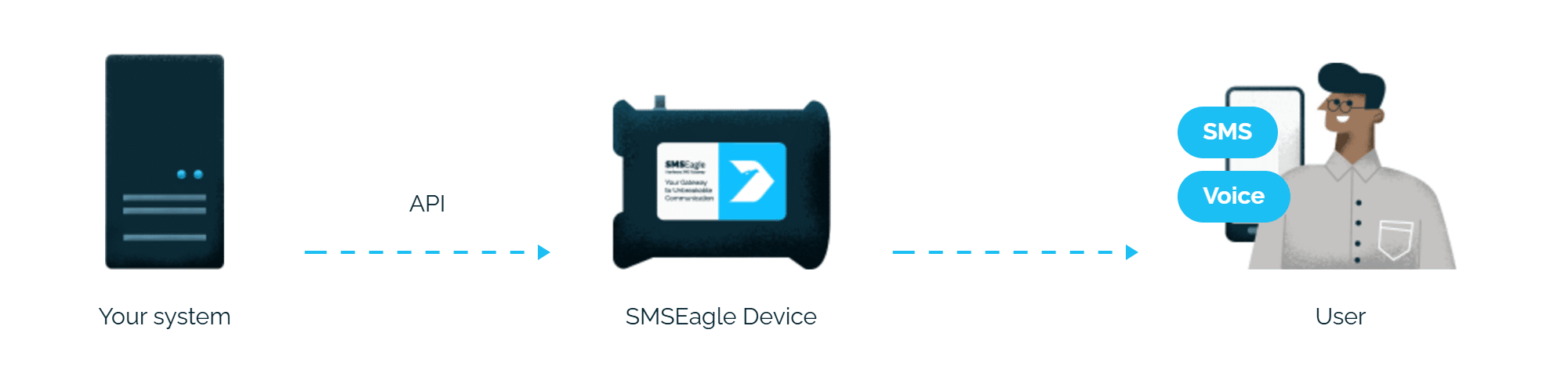
Opsview sends an HTTP API request directly to SMSEagle over your local network.

3

Alert

SMSEagle delivers the alert over its own cellular connection, not through a third-party service, as an SMS to the recipient’s phone.

Set up in about 10 minutes

It should take about five minutes to have it up and running. Generate an API token in SMSEagle, install the notification script in Opsview, and you’re done.

SMSEagle sends Opsview alerts to the right person by SMS, day and night.

No per-message fees

SMSEagle sends SMS through a regular SIM card, so you only pay for your mobile plan.

Alerts keep going if one carrier fails

On devices with two SIM cards from different operators, SMSEagle switches to the second one when the first operator’s network is down.

Alerts keep working even if one device fails

Two SMSEagle devices can work as an HA cluster: if one fails, the other takes over sending.

SMSEagle configuration

1. Create a new user for this script in SMSEagle > System > Users menu.

2. Go to Settings > Global settings > API, open the API v1 page and click Create API key, fill in Key name and set that user as Owner.

3. In the key form, add the permission for the request you want to send, then click Create key – the access token is shown only once, right after saving.

Opsview configuration

1. Download latest version of the script notify_opsview_smseagle.sh from our repository: https://github.com/smseagle/smseagle-opsview
Place the script in your Opsview plugins directory (by default: /usr/local/nagios/libexec/notifications). Make sure it is executable and owned by nagios user.

2. Edit script content:
SMSEAGLEIP="http://192.168.1.101"
SMSEAGLETOKEN="123abc456def789"
SMSEAGLEMSGTYPE="sms" (available values: sms, ring, tts, tts_adv)

Optional:

SMSEAGLEDURATION = Duration of a call in seconds (default value: 10)
SMSEAGLEVOICEID = ID of a voice model (default value: 1)

Replace SMSEAGLEIP and SMSEAGLETOKEN in script with your values.
3. Create the SMS notification method:
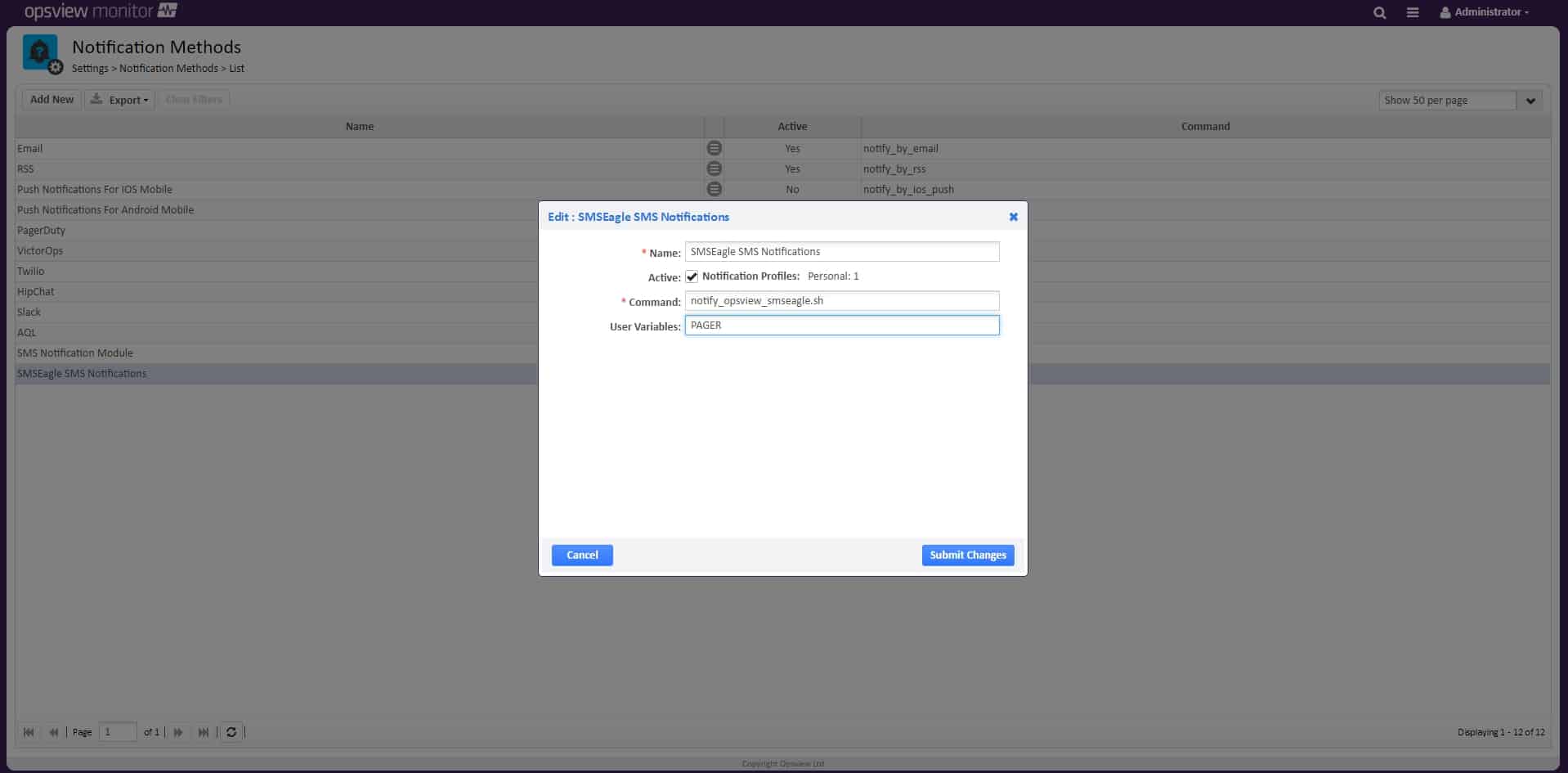
– Go to Settings -> Notification methods -> Add new
  • Name: add name for new method
  • Make it active
  • Command: put notify_opsview_smseagle.sh
  • User variables: Here you have to pass a variable with destination number, fe. PAGER, OPSVIEW_CONTACTPAGER or NAGIOS_CONTACTPAGER
  • Submit changes.
  • Each User will have to select this Notification Method to one of their Notification Profiles.
  • Test Cause a failure to test that the notification is sent. After a few seconds, you should receive an SMS.
  • Reload Opsview to make the changes live.

Explore SMSEagle Demo device

SMSEagle is a hardware & software solution that guarantees a swift delivery of your messages to designated recipients, whether it’s for notifications, alerts, or important updates.

After registering to a demo you get a remote access to our physical device NXS-9750.

  • 14-days free trial
  • Access to over 20 functionalities

What is hardware
SMS Gateway?

Learn more about
SMSEagle features