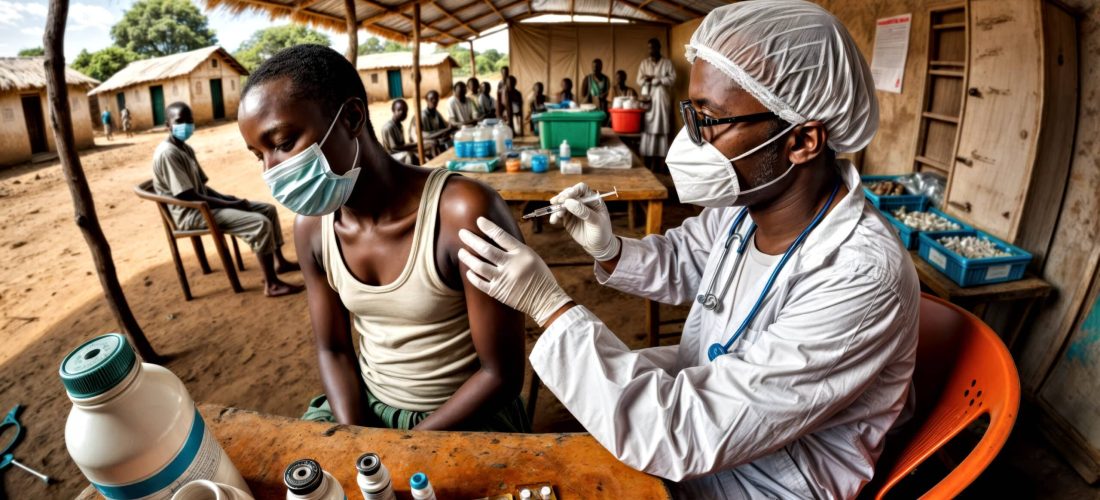
Eradicating Polio in Africa: Bill & Melinda Gates Project Helped Nigeria & 10 Other African Countries
SMS Surveillance for Polio Detection
This case study examines the AVADAR project, a WHO-collaborated initiative to enhance disease surveillance for Polio in Africa. The project’s challenge was to overcome inaccurate and significantly delayed reporting of Acute Flaccid Paralysis (AFP) cases from remote and security-compromised areas, particularly in Nigeria.
The solution was an SMS-based mobile application that utilized the SMSEagle SMS Hardware Gateway for its telecommunications. This allowed health workers in areas with only 2G connectivity to report suspected AFP cases, which were then automatically forwarded as SMS alerts to surveillance officers. This system enabled the detection of over 1,000 AFP cases, contributing to the data required for the WHO to declare Africa polio-free in 2020.
AVADAR Polio Surveillance Initiative
The AVADAR project, developed in 2016 by the World Health Organization (WHO), the Bill & Melinda Gates Foundation, and Novel-T, is a platform created to increase the sensitivity of national surveillance systems for Acute Flaccid Paralysis (AFP). It is a crucial component of the Poliovirus Surveillance program, which is essential for detecting the virus early and maintaining Africa’s polio-free status.
The primary challenge was ensuring the regular collection and submission of accurate surveillance data to support polio eradication efforts.
In Nigeria, many community health workers and informants struggled to recognize the symptoms of Acute Flaccid Paralysis (AFP) — the key indicator for detecting poliovirus.
There were delays in collecting and transmitting data from remote and security-compromised areas to health authorities.
These issues resulted in inadequate or incomplete reporting, which reduced the sensitivity of the surveillance network and delayed investigations by Disease Surveillance Officers.
AVADAR with SMSEagle SMS Gateway
The solution was AVADAR (Audio-Visual AFP Detection and Reporting) — an SMS-based mobile platform created to improve AFP detection and reporting.
The system used the SMSEagle Hardware SMS Gateway (MHD-8100-3G) as its telecommunications backbone.
This approach enabled deployment in remote regions with only basic 2G coverage, without the need for internet access.
Health workers used the mobile app (which included educational videos) to collect and submit case data.
The app then automatically transmitted data via SMS through the SMSEagle API to the AVADAR server.
The server instantly sent SMS alerts with case details to the appropriate Disease Surveillance Officers, enabling immediate response and follow-up.
Deployment scale: Over 6,000 health workers across 11 states in Nigeria, later expanded to 10 additional African countries at high risk of polio reemergence.
By October 2019, workers had sent 25,747 SMS alerts, leading to 1,019 confirmed AFP cases.
None of the confirmed AFP cases were polio, demonstrating the system’s effectiveness in surveillance and early detection.
The success contributed to Africa and Nigeria being officially declared polio-free on August 24, 2020.
The project also bridged the knowledge gap, making local communities more aware and responsive to AFP symptoms.
Automated SMS alerts for healthcare & emergency response