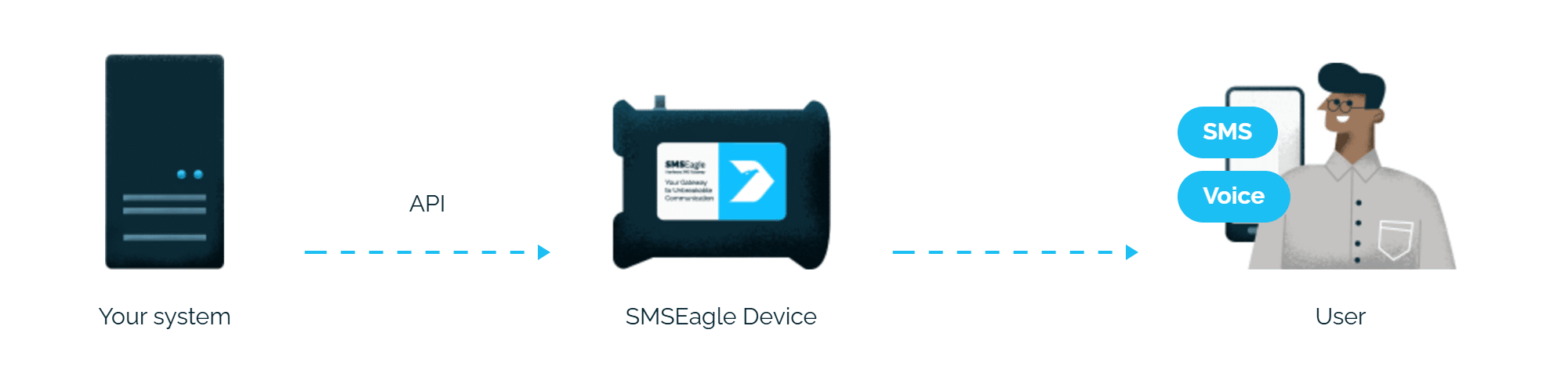
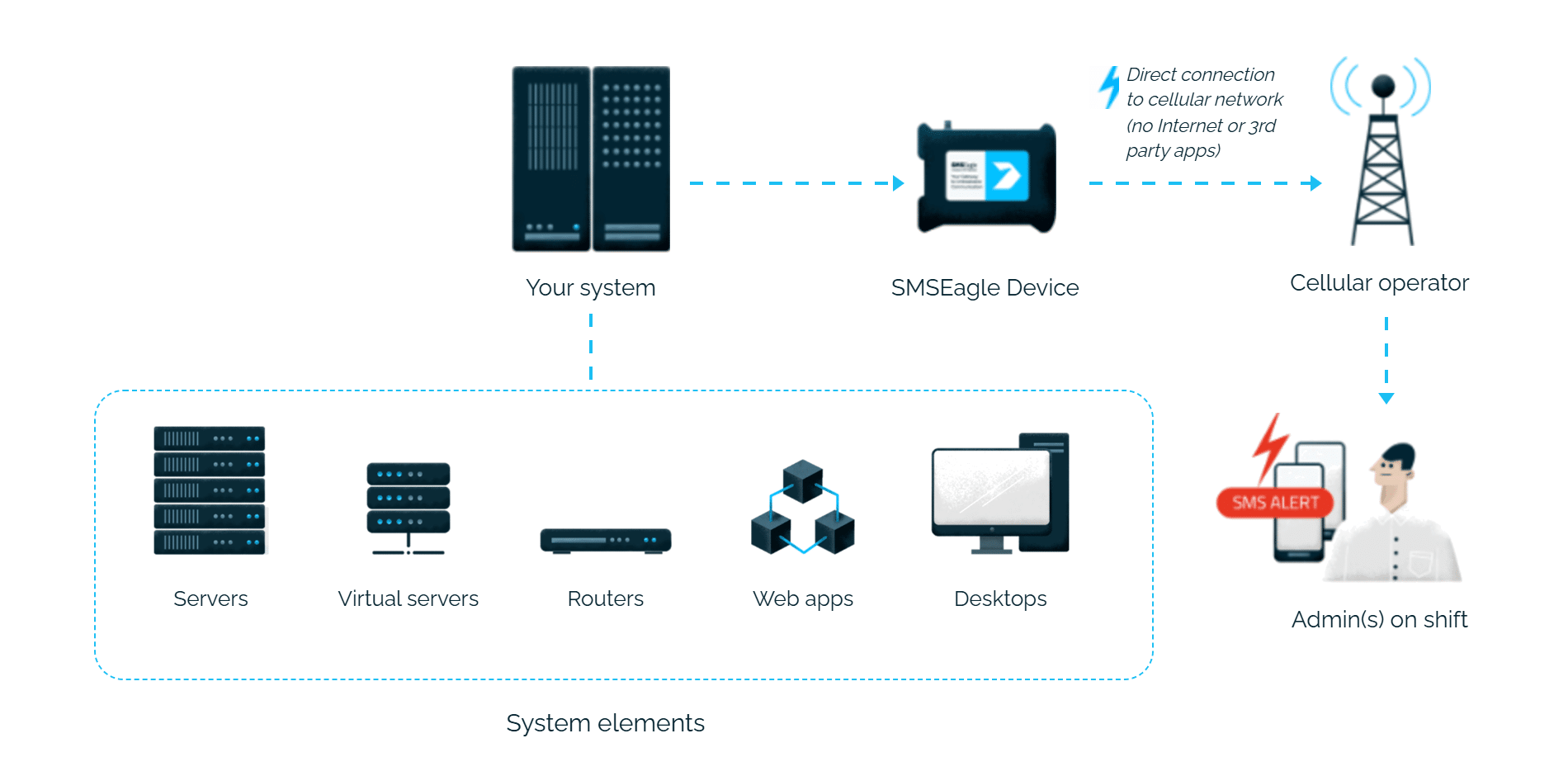
Zenoss alerts reach the person on duty as an SMS or a phone call. SMSEagle sends them over its own cellular connection, so they don’t depend on internet access or a cloud service.
SMSEagle sends Zenoss alerts to the right person by SMS or phone call, day and night.
SMS and voice calls from one device
SMSEagle sends Zenoss alerts as an SMS, a ring-only call or a call that reads the alert aloud, all from a single device.
Alerts keep going if one carrier fails
On devices with two SIM cards from different operators, SMSEagle switches to the second one when the first operator’s network is down.
Alerts keep working even if one device fails
Two SMSEagle devices can work as an HA cluster: if one fails, the other takes over sending.
SMSEagle configuration
Create a new user for this script in SMSEagle.
Go to Settings > Global settings > API, open the API v2 page and click Create API key, fill in Key name and set that user as Owner.
In the key form, assign the right permissions (depending on what type of message/call you want to send), then click Create key. The access token is shown only once, right after saving.
Optionally, change the parameters required for TTS calls:
SMSEAGLE_DURATION = 10
SMSEAGLE_VOICE_ID = 1
Save the script to the location: [ZENDIR]/bin/zenoss_smseagle.py (where [ZENDIR] is your Zenoss directory).Ensure that it’s executable (chmod 755 zenoss_smseagle.py).
3. Add a cell phone number to the “Pager” field of each Zenoss user account.
4. Go to Advanced->Settings and modify the “Page Command” to:
$ZENHOME/bin/zenoss_smseagle.py $RECIPIENT
Explore SMSEagle Demo device
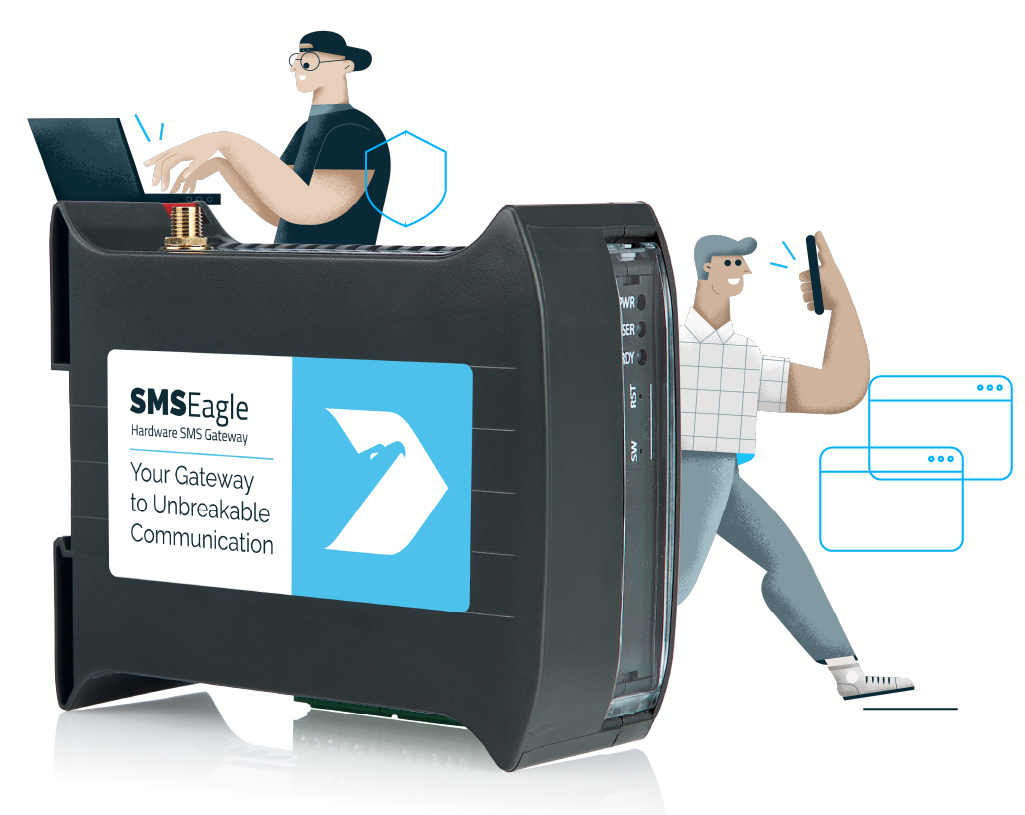
SMSEagle is a hardware & software solution that guarantees a swift delivery of your messages to designated recipients, whether it’s for notifications, alerts, or important updates.
After registering to a demo you get a remote access to our physical device NXS-9750.