ServiceDesk Plus notifications about tickets reach technicians as an SMS. SMSEagle sends them over its own cellular connection, so they don’t depend on internet access or a cloud service.
ServiceDesk Plus has its own SMS settings. You select a custom SMS provider and enter the SMSEagle address, with no plugin to install.
Technicians learn about tickets straight away
ServiceDesk Plus sends an SMS about tickets, so technicians don’t have to keep checking their inbox.
Works without internet
SMSEagle sends alerts through its own SIM card straight to the mobile network, so they don’t depend on internet access or a cloud SMS provider.
How it works
1
Event Trigger
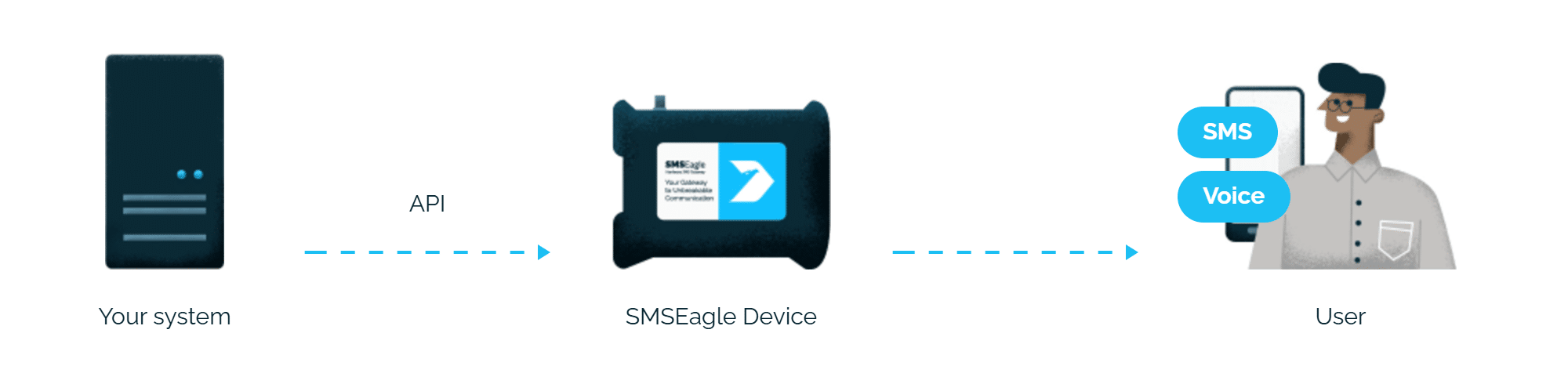
A new ticket, an SLA breach, or a technician reassignment fires an SMS Notification Rule in ServiceDesk Plus.
2
Communication
ServiceDesk Plus sends an HTTP GET request to the SMSEagle device over your local network, using the SMSEagle HTTP API (login/password authentication).
3
Alert
SMSEagle delivers the alert over its own cellular connection, not through a third-party service, as an SMS to the recipient’s phone.
Set up in about 10 minutes
Thanks to HTTP API support in SMSEagle and the built-in SMS Notification Settings in ServiceDesk Plus, you can get everything running in a matter of minutes. Configure a user with API access, point ServiceDesk Plus at your device’s IP, and you’re done.
SMSEagle sends ServiceDesk Plus alerts to the right person by SMS, day and night.
No per-message fees
SMSEagle sends SMS through a regular SIM card, so you only pay for your mobile plan.
Alerts keep going if one carrier fails
On devices with two SIM cards from different operators, SMSEagle switches to the second one when the first operator’s network is down.
Alerts keep working even if one device fails
Two SMSEagle devices can work as an HA cluster: if one fails, the other takes over sending.
SMSEagle configuration
Create a new user in SMSEagle (menu System > Users) with access level “User”.
Grant API access to the created user:
go to Settings > Global settings > API and open the API v1 page
click Create API key, fill in Key name and select that user as Owner
Add access permissions in section Permissions for: Send SMS, Send to contact, Send to group
click Create key. Then, in System > Users, open that user and tick Enable user/password authentication (APIv1 only).
Open Settings > Global settings > Network > SSL, turn off Forward HTTP to HTTPS and click Save changes.
ServiceDesk configuration
ServiceDesk Plus Setup
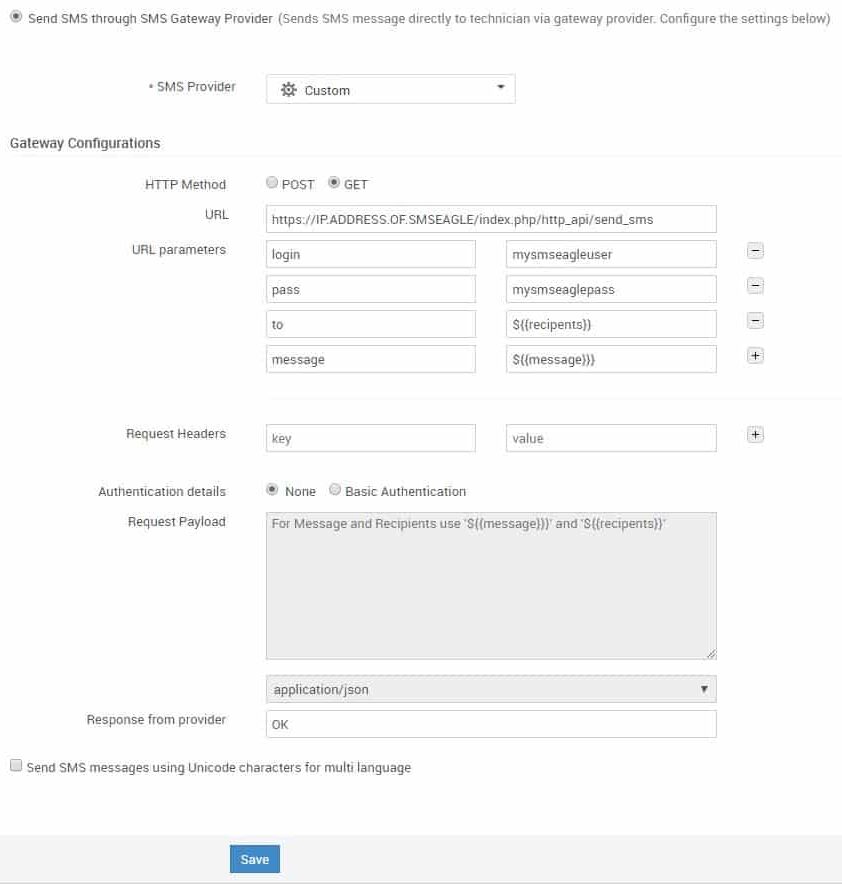
In menu choose: Admin > Organizational Details > SMS Notification Settings
Configure the following settings:
a. Choose “Send SMS through SMS Gateway Provider” b. SMS Provider: Custom c. HTTP Method: GET d. URL: https://IP.ADDRESS.OF.SMSEAGLE/index.php/http_api/send_sms (replace IP.ADDRESS.OF.SMSEAGLE with IP address of your device) e. URL parameters:
i. Parameter: login, Value: (login of the user created in SMSEagle device) ii. Parameter: pass, Value: (password of the user created in SMSEagle device) iii. Parameter: to, Value: ${{recipients}} iv. Parameter: message, Value: ${{message}}
f. Authentication details: None g. Response from provider: OK
3. Save settings
4. Configure the Technician Mobile Numbers for sending SMS notifications. Also, ensure to prefix the proper country code in Mobile field. This is accessible from Admin >> Users >> Technicians >> Technician Details.
5. SMS Messages can be customized in Notification Rules > SMS Templates.
Explore SMSEagle Demo device
SMSEagle is a hardware & software solution that guarantees a swift delivery of your messages to designated recipients, whether it’s for notifications, alerts, or important updates.
After registering to a demo you get a remote access to our physical device NXS-9750.